
Hyundai’s flagship Ioniq 9 arrived in Australia a few months ago, sitting firmly atop the Hyundai range of electric vehicles as their biggest and the most expensive.
The Ioniq 9 is a spacious and luxurious full-size SUV, offering buyers the choice of flexible 6 or 7-seat layouts and up to 600 km of promised range.
Built upon the same E-GMP platform as other Hyundai and Kia EVs, Ioniq 9’s most obvious competitor is the 7-seat Kia EV9 which has been around for more than a year now. Sales are probably still ramping up, but with 26 Ioniq 9 sales between July and September 2025, EV9 outsold the Ioniq by 3 to 1 during the same time period.
The Ioniq 9 is available in a single Calligraphy variant, starting from $119,750 plus on-road costs, overtaking Ioniq 5 N as Hyundai’s most expensive vehicle, electric or otherwise. Opting for the 6-seat layout costs an extra $2,000, losing a seat but gaining captains chairs in the middle row featuring integrated leg and arm rests.
For a recent family holiday I borrowed a 6-seat Ioniq 9 in Celadon Grey Matte from Hyundai, which retails for $132,253 driveaway in NSW. This represents a huge premium over Hyundai’s equivalent combustion SUVs, for example a Santa Fe or Palisade Calligraphy with 6, 7 or 8 seats can be purchased for around $80,000 driveaway.
Massive boot, especially with the 6-seat option
I specifically asked Hyundai for an Ioniq 9 with the 6-seat layout, as we wanted to take a couple of surfboards on the holiday and I thought they would fit nicely down the middle of the car without needing roof racks.
Before packing the car I wasn’t sure how much room the boards would take up, or if it would affect visibility at all. It turns out the Ioniq 9 boot swallowed the 2 boards, an esky, plus all the gear and food for 4 people easily, without even going above the seat backs.
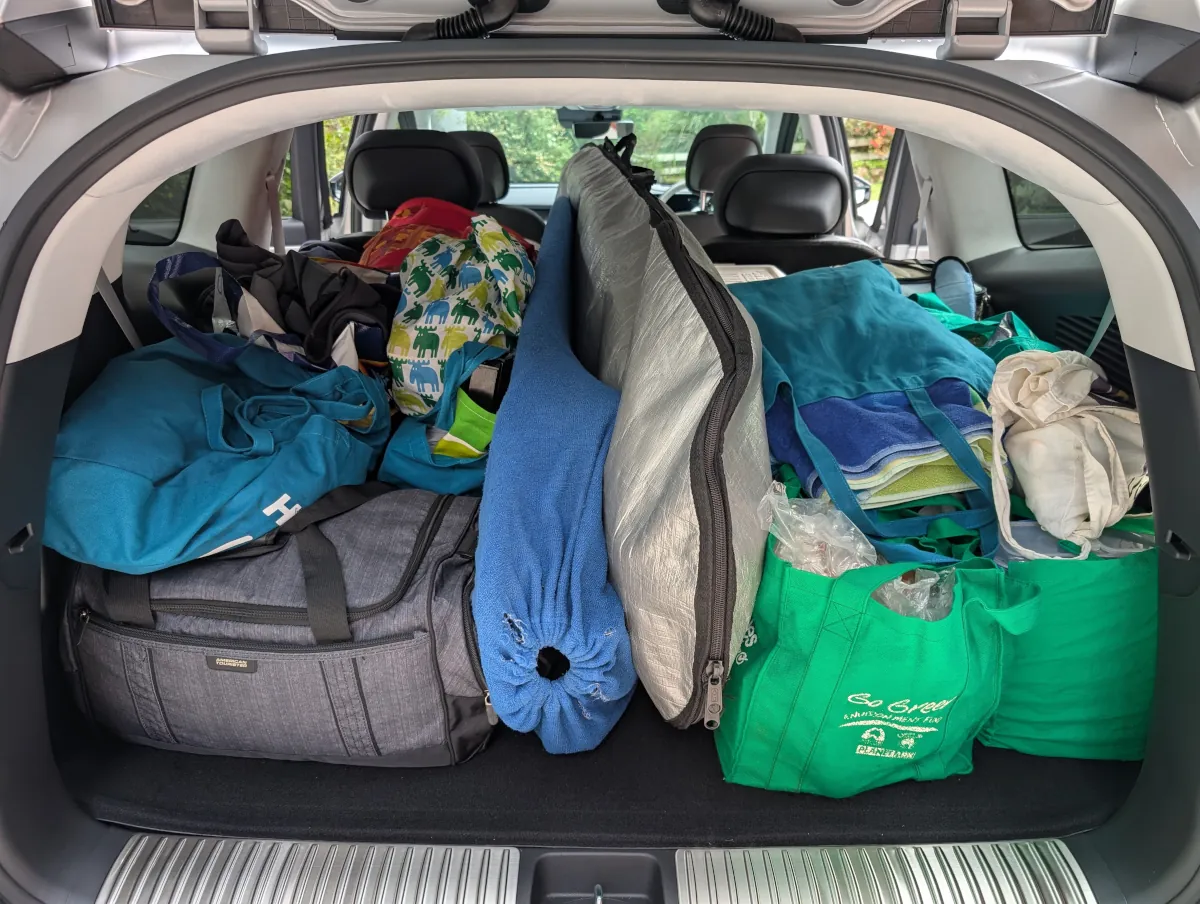
The ability to slide the surfboards down the middle of the Ioniq 9 also came in handy throughout the trip, as it was so much quicker and easier loading them in the back compared to tying them onto the roof.
Even with the second row set up for tons of legroom, there was still plenty of extra space behind those seats to stow extra things like shoes that normally get thrown in the frunk of my car. The Ioniq 9 does have a 52 L frunk, but that was taken up by the charging cables and a tyre repair kit.
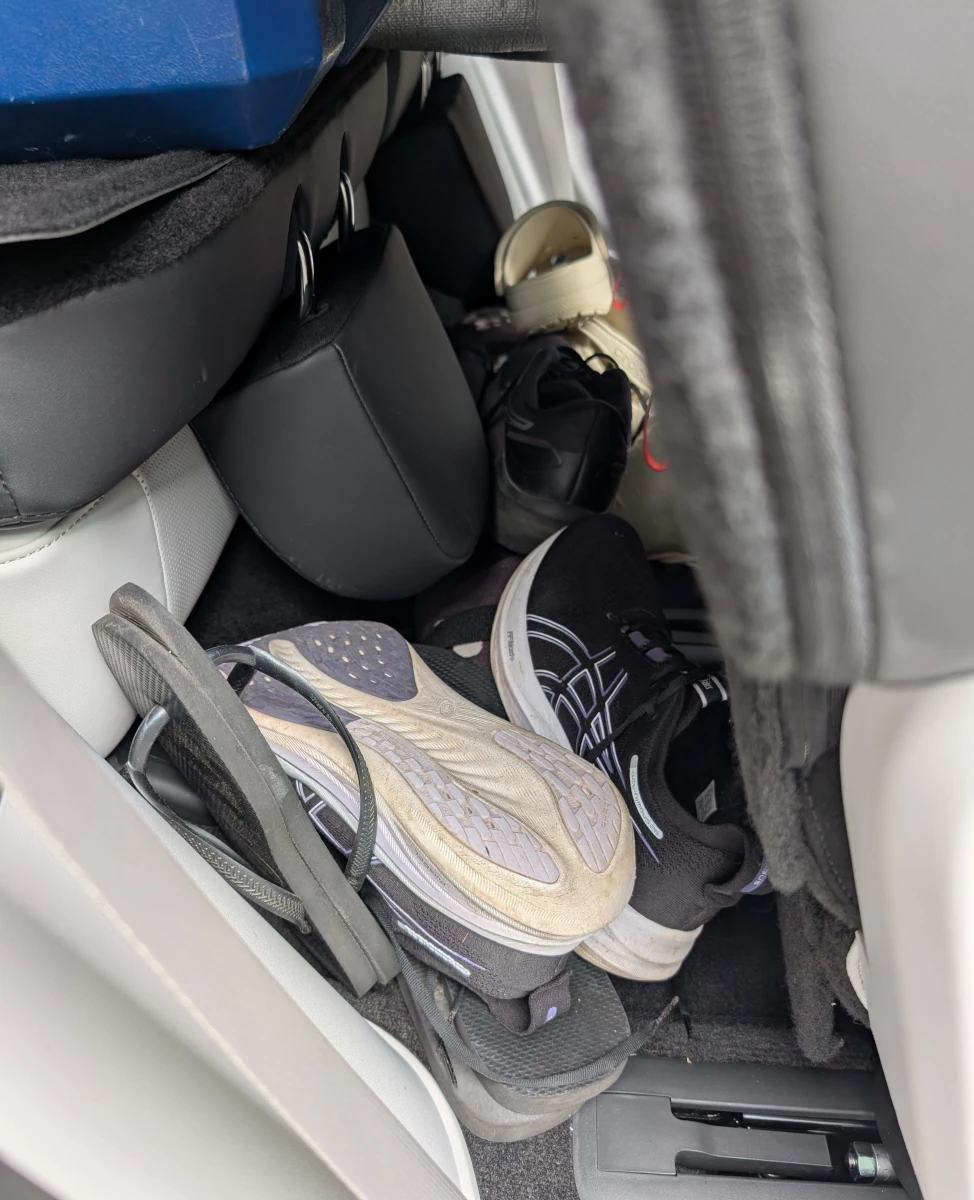
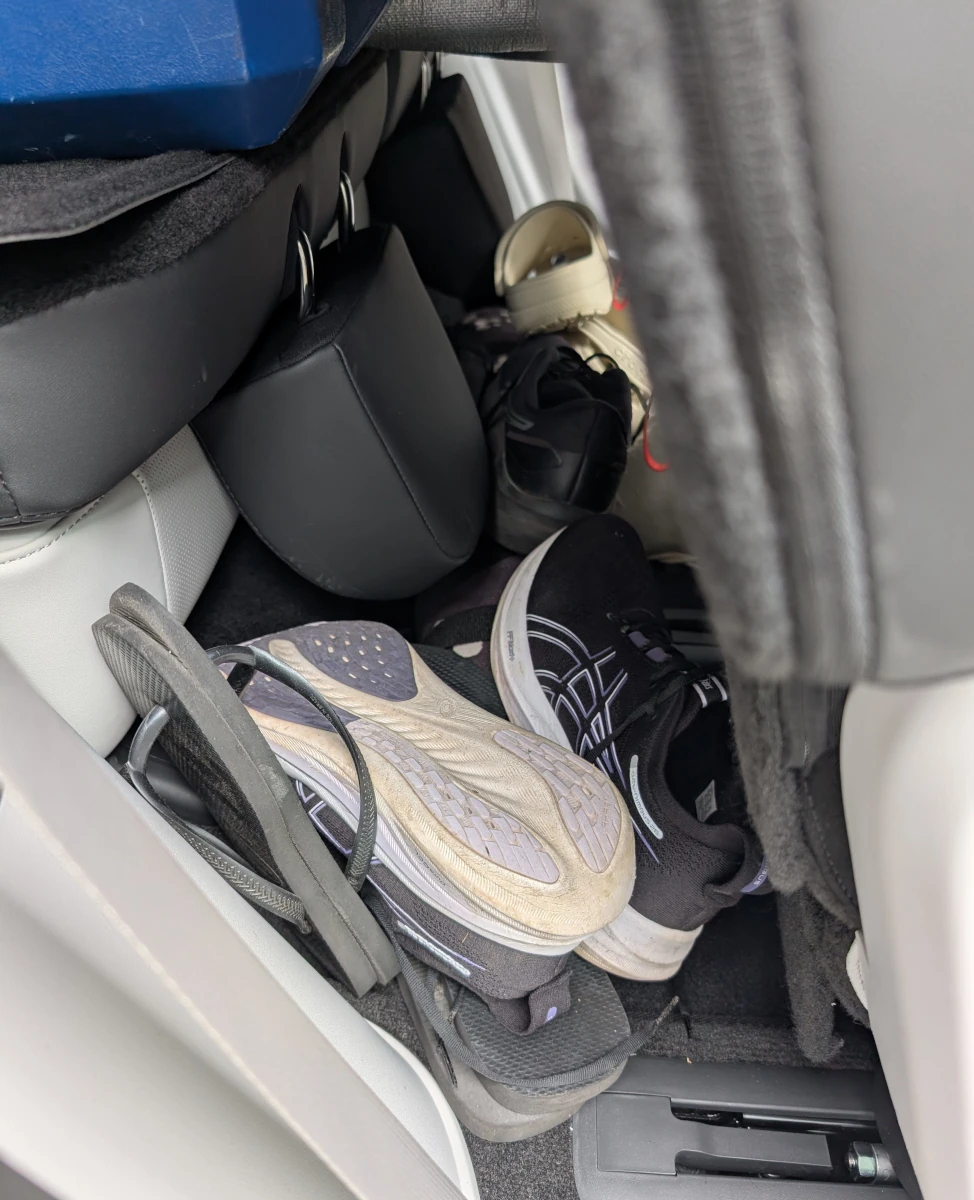
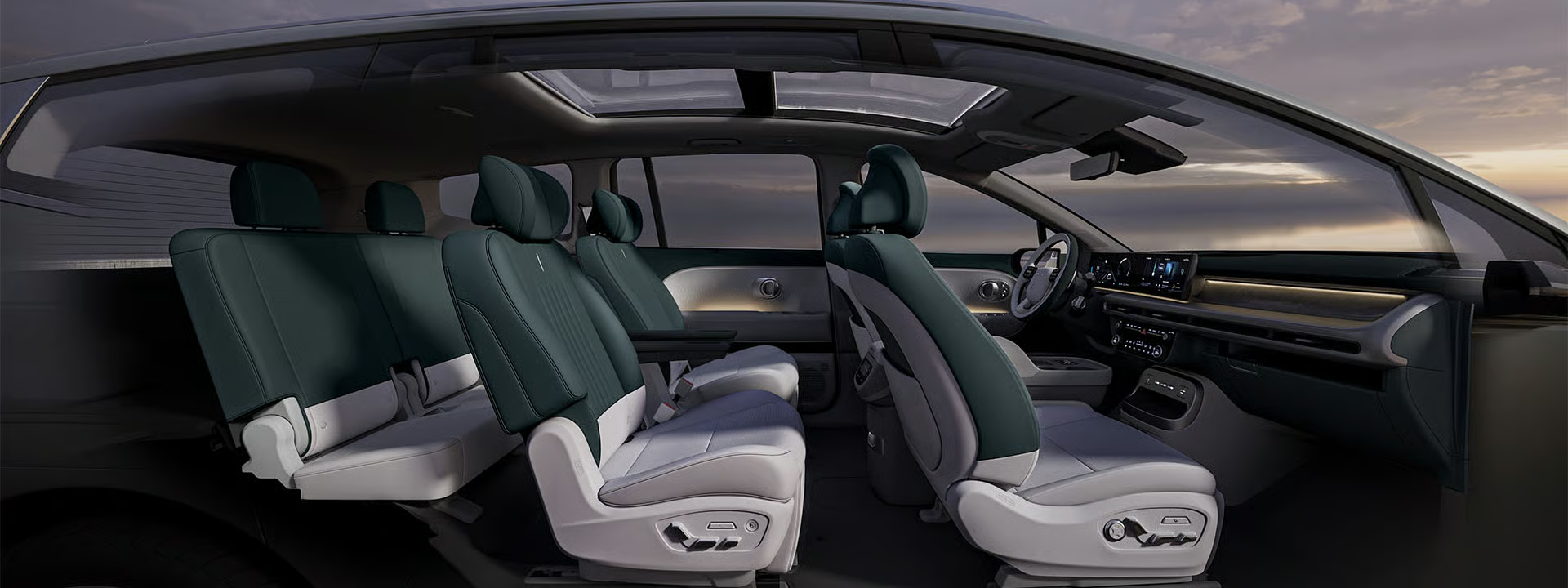
Cabin storage space is also plentiful in the Ioniq 9, with so many different nooks and hidey holes all over the place that you could easily lose things if you’re not careful. The 6-seat option comes with a sliding centre console too, allowing you to easily shift between the front seats or prioritise space in the second row as necessary.
Over the course of the trip, several people came up and asked me which model Hyundai it was, and most of them commented on how they liked the exterior design as well as the massive amounts of space it seemed to have inside.
Familiar infotainment and driving experience
If you have used any of the Hyundai or Kia electric vehicles, the Ioniq 9 infotainment system will be instantly familiar, with a large horizontal screen stretching from behind the steering wheel across to the centre of the dash, handling the driver’s display and entertainment functionality.
Below the centre of the dash is a row of physical buttons and knobs for commonly used things such as audio volume, maps, media and skipping audio tracks. There are also dual temperature knobs either side of a narrow touchscreen dedicated to the climate controls, making adjustments quick and easy for the driver and front passenger.
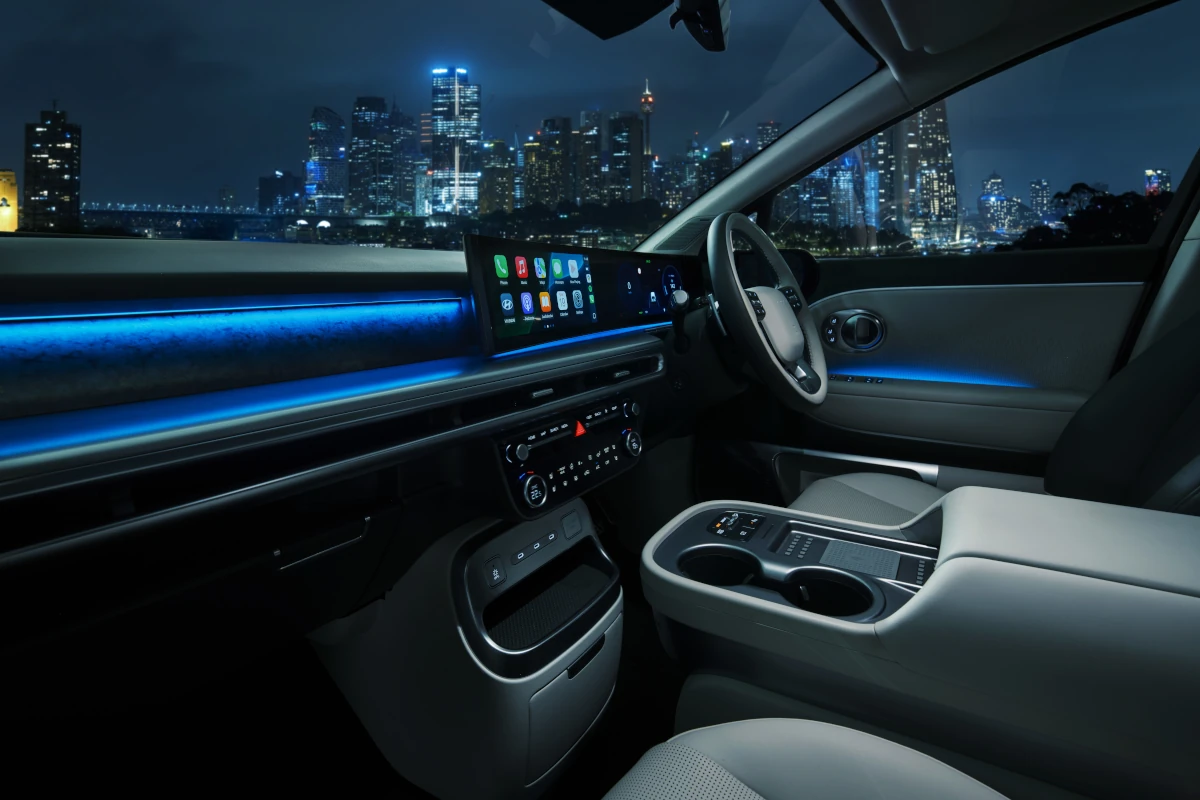
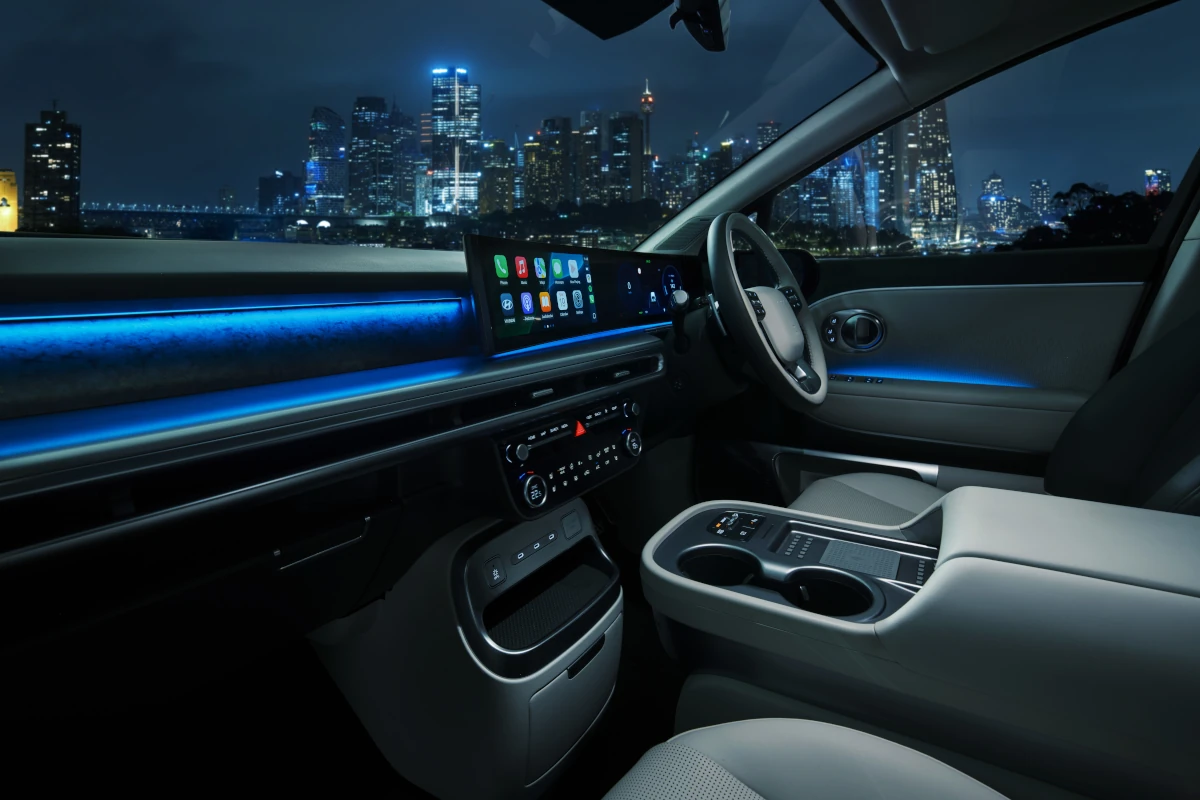
Driving the Ioniq 9 is much like any other Hyundai EV too, only bigger, which I found took a little getting used to at first. Size does not hamper visibility though, with clear views all around the Ioniq 9 and excellent 360-degree cameras to help park this beast.
One pedal driving is available, but has not been upgraded to the latest i-Pedal version so it needs to be turned on again using the steering wheel paddles at the start of every drive and after reversing. Various driving modes can be selected using a switch at the front of the centre console, including eco, normal, sport and sand, snow or mud.
The Ioniq 9 suspension has been primarily tuned for comfort, combined with plush seats and the spacious cabin make it an easy car to while away the highway miles in. Every seat in the 1st and 2nd row comes with both heating and ventilation. The driver is also spoiled with an Ergo Motion seat, which uses air pockets to provide a gentle massage and reduce fatigue.
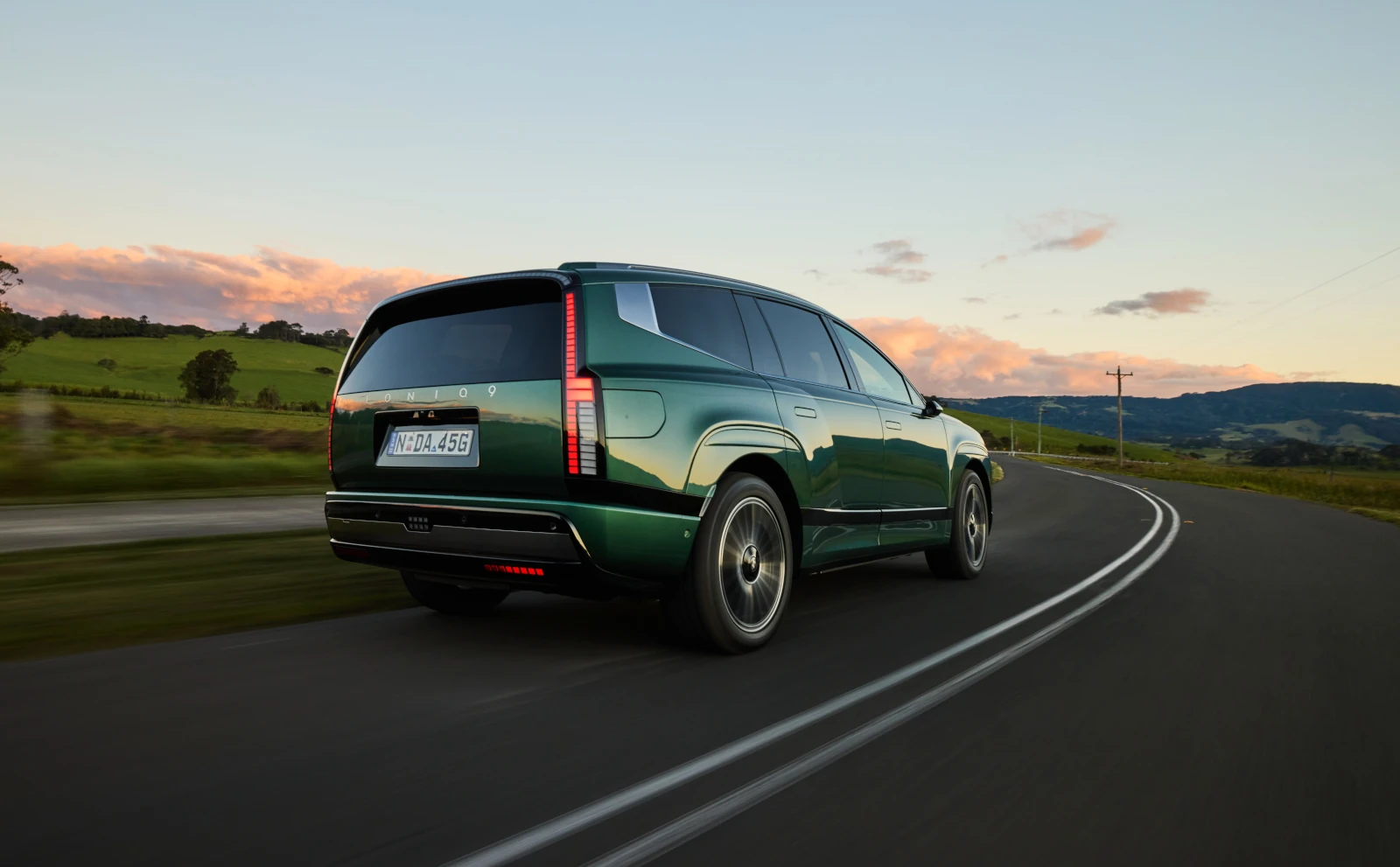

Hyundai advertises the Ioniq 9 with 600 km WLTP range, although this is overstated in my experience, having measured real world consumption after driving over 1,000 km in total during my time with the car.
My efficiency around town averaged 206 Wh/km while highway driving on the road trip consumed 221 Wh/km. These figures equate to a highway range of roughly 480 km on a full charge, or 336 km between charging stops if aiming to keep the battery between 10 and 80%.
These figures are still very respectable and should suppress range anxiety on most road trips that people are likely to take. For example, we left southern Sydney for the start of our holiday on 90% state of charge and arrived at Blueys Beach with 30-something percent left.
We weren’t able to trickle charge at our accommodation there, but still managed to drive around for a few days and then continue further north to arrive at a charging station in Taree with 10% remaining, no sweat.
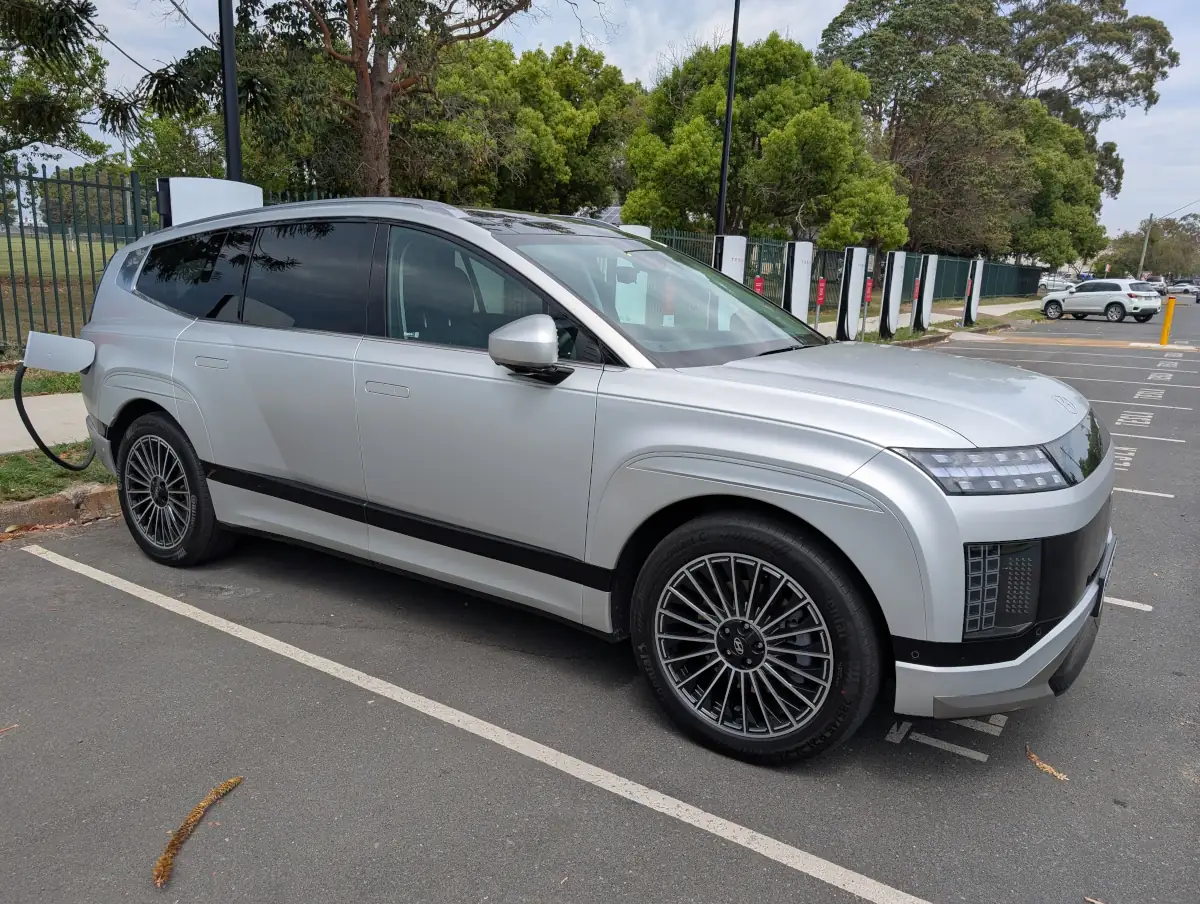

I am probably biased by my recent experience with Tesla FSD (Supervised) and how smoothly it drives, which highlighted some flaws with Hyundai’s adaptive cruise control and lane centering system that others may not necessarily notice.
On straight stretches of highway, the car sometimes weaves from side to side ever so slightly. I’m not sure if passengers will feel it, but as the driver you can feel the steering wheel gently moving back and forth.
Occasionally on some of the sharper highway bends, the lane centering system seems to get lazy and drift towards the lane markings. In these cases you need to actively steer the Ioniq 9 to avoid triggering the lane departure warning system.
Having said all this, these are minor issues in an otherwise very pleasant and easy car to drive, and hopefully Hyundai can iron out the bugs in future over the air software updates as well.
How does the Ioniq 9 compare to Kia’s EV9 and other 7-seaters?
Last year I borrowed a Kia EV9 Earth for a road trip to northern NSW and also travelled a similar distance in my cousin’s EV9 beforehand, so I have first-hand experience of how it compares to the Ioniq 9, especially on road trips.
In terms of exterior dimensions, kerb mass, boot space and towing capacity, these two vehicles are nearly identical. There is no 6-seat option for the EV9 though, and you need to opt for the top-spec EV9 GT-Line to get heated and ventilated seats in the second row, which bumps the price to around $140,000 driveaway.
When others compare these two vehicles, they often say the Ioniq 9 is more luxurious inside. I agree that Hyundai’s take on the full-size electric SUV does have a slight edge in terms of look and feel of the cabin, but the gap is not huge in my opinion and some of it will come down to personal taste as well.
If price is a deciding factor, EV9 has the edge with the base model Air coming in significantly cheaper at roughly $106,000 driveaway, although it is only single motor rear-wheel drive, with a smaller 76 kWh battery offering up to 443 km WLTP range.
Speaking of range, the Ioniq 9 looks much better on paper at 600 km compared to 512 km WLTP for the mid-spec EV9 Earth dual motor. However, in my testing the EV9 came much closer to its advertised range, consuming 210 Wh/km on the highway for a maximum figure of 457 km from a full charge, not a lot different to 480 km in the Ioniq 9.
Apart from an edge over the Kia EV9’s cabin, it is hard to tease these 2 competitors apart, so if you are cross-shopping them I would recommend taking both for a decent test drive and spending time exploring the interior features to see which things you value the most.
With a growing range of EV models in Australia, there are several other options if you are looking for something with 7+ seats and plenty of interior space. Most of them are vans, such as the LDV Mifa 9, Mercedes-Benz EQV, Volkswagen ID.Buzz, Zeekr 009 and upcoming XPeng X9. 7-seat SUVs include the Mercedes-Benz EQB and Volvo EX90.
I have not test driven any of these other 7-seaters yet, so I can’t compare any of them directly. In the meantime, see Riz Akhtar’s take on the EX90: Volvo’s most powerful SUV is a fast, luxury electric 7-seater done right and Giles Parkinson’s First drive of Volkswagen ID.Buzz: Urban cool and tight turning circles.
Conclusion
Overall I found the Ioniq 9 was a compelling, well rounded overall package. It offers huge amounts of flexible boot space and cabin storage, along with an interior that was very comfortable and practical for road trips.
The 6-seater Ioniq 9 would be my pick, with 2 kids I rarely need more than 4 seats and the added flexibility of being able to carry long items down the middle of the car easily is a great feature.
Is the Ioniq 9 Hyundai’s best EV? Like all good questions, I think the short answer is it depends. If you have a big family, go on frequent road trips with lots of stuff or simply need the space it offers, then yes it is probably the best Hyundai EV for you.
At the other end of the scale, I had a lot of fun test driving Hyundai’s smallest and most affordable EV, the Inster. If you like compact cars which still have plenty of interior space and comfort, then the Inster is a great little car.
For the hardcore performance enthusiasts, the Hyundai Ioniq 5 N is the most fun electric vehicle I have driven so far. With such a diverse lineup of EVs topped off by the new Ioniq 9, Hyundai truly has something for everyone.
Table of key specifications for Hyundai Ioniq 9
| Variant | Hyundai Ioniq 9 Calligraphy | ||
| Starting price | $119,750, plus on-road costs | ||
| Paint colours and options | 10 exterior colours:
4 interior colours:
|
||
| Battery size | 110 kWh gross, 106 kWh usable | ||
| Battery chemistry | Nickel Cobalt Manganese (NCM) | ||
| Range | 600 km WLTP | ||
| Driven wheels | All-wheel drive | ||
| Power / Torque | 314 kW / 700 Nm | ||
| Maximum charging speed | 11 kW AC, 250 kW DC | ||
| Charging time | 7 kW AC (0 – 100 %) – 15 hours 15 minutes 11 kW AC (0 – 100 %) – 10 hours 12 minutes 250 kW DC (10 – 80 %) – 24 minutes |
||
| Bidirectional charging | V2L output up to 3.6 kW. Hyundai confirmed the Ioniq 9 can participate in the ongoing V2G trials in Australia, so full V2H/V2G support should be coming. |
||
| Exterior dimensions | Length: 5,060 mm Width: 1,980 mm Height: 1,927 mm Wheelbase: 3,130 mm Ground clearance: 174 mm |
||
| Kerb mass | 2,590 kg | ||
| Storage space | Frunk: 52 L Boot, behind 3rd row: 338 L Boot, behind 2nd row: 908 L Boot, behind 1st row: 2,419 L |
||
| Service interval | 24 months / 30,000 km | ||


Tim has 20 years experience in the IT industry including 14 years as a network engineer and site reliability engineer at Google Australia. He is an EV and renewable energy enthusiast who is most passionate about helping people understand and adopt these technologies.


